

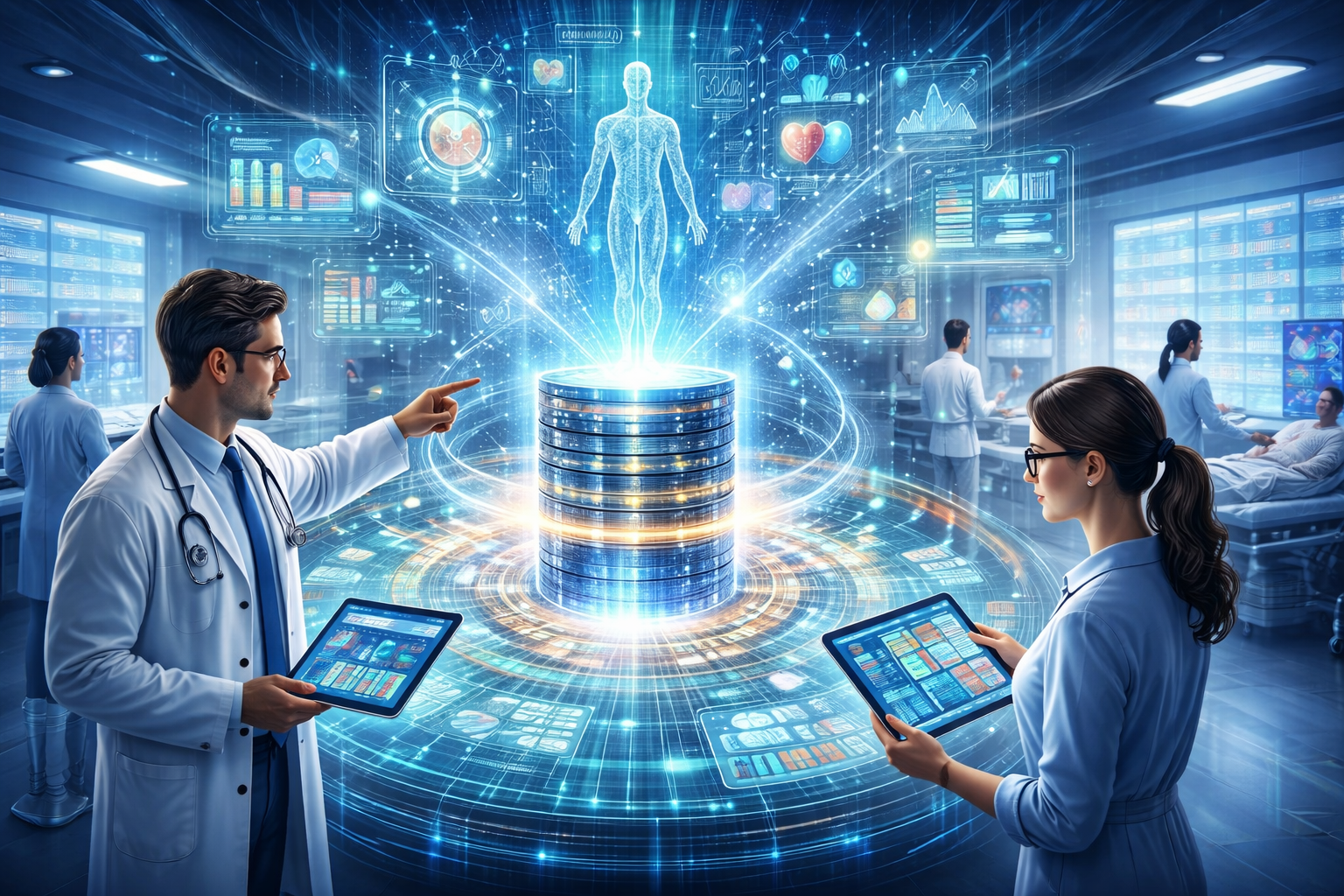
In today’s technology-driven world, healthcare systems generate an enormous amount of data from electronic health records, lab results, wearable devices, billing systems, and patient feedback platforms. However, raw data alone has little value unless it is analyzed and transformed into meaningful insights. This is where data mining in healthcare plays a critical role.
Data mining enables healthcare organizations to extract actionable intelligence from complex and unstructured datasets. It helps improve patient outcomes, enhance clinical decision-making, reduce operational costs, and support proactive healthcare delivery. From predicting disease risks to optimizing hospital workflows, data mining is reshaping the healthcare ecosystem at every level.
As artificial intelligence and advanced analytics continue to mature, healthcare data mining has evolved from a theoretical concept into a practical necessity for modern healthcare systems.
What Is Data Mining in Healthcare?
Data mining in healthcare refers to the process of analyzing vast volumes of medical and operational data to identify hidden patterns, correlations, and trends that can support better clinical and administrative decisions.
Unlike traditional reporting systems that focus on historical summaries, data mining emphasizes predictive and prescriptive insights. It allows healthcare providers to anticipate patient needs, identify risks early, and optimize care delivery based on real evidence rather than assumptions.
Healthcare data mining combines techniques from statistics, machine learning, artificial intelligence, and data science to transform raw medical data into knowledge that supports smarter healthcare decisions.
Healthcare organizations should partner with experienced providers of AI development services in healthcare to build predictive models and leverage NLP on clinical data.
Why Healthcare Needs Data Mining
Healthcare is one of the most data-intensive industries in the world. Every patient interaction generates information, yet much of this data remains underutilized. The increasing complexity of diseases, rising treatment costs, and growing patient expectations make it essential for healthcare organizations to rely on intelligent, data-driven strategies.
Data mining helps healthcare providers address challenges such as identifying high-risk patients, reducing hospital readmissions, improving treatment accuracy, managing resources efficiently, and detecting fraudulent activities. It also supports population health management by identifying trends across large patient groups.
Without data mining, healthcare organizations risk missing critical insights hidden within their own data.
How Data Mining Works in Healthcare
The healthcare data mining process begins with collecting data from multiple sources, including clinical systems, diagnostic tools, administrative platforms, and connected medical devices. This data is then cleaned and standardized to eliminate inconsistencies, errors, and duplicates.
Once prepared, relevant features are selected and transformed into usable formats. Advanced analytical models and machine learning algorithms are applied to uncover patterns, trends, and predictive signals. These insights are then presented through dashboards, alerts, or decision-support systems that clinicians and administrators can use in real time.
The ultimate goal is to ensure that insights are not just generated, but also seamlessly integrated into everyday healthcare workflows.
Core Data Mining Techniques in Healthcare
Healthcare data mining relies on a variety of analytical techniques, each designed to solve specific problems.
Predictive analytics helps forecast patient outcomes, disease progression, and readmission risks. Classification techniques categorize patients based on risk levels, diagnoses, or treatment responses. Clustering groups patients with similar characteristics to identify hidden patterns in symptoms or treatment effectiveness.
Association analysis uncovers relationships between conditions, medications, and outcomes, while natural language processing extracts insights from unstructured clinical notes. Anomaly detection plays a key role in identifying irregular patterns, especially in billing and insurance claims.
Together, these techniques enable healthcare organizations to move beyond reactive care and adopt proactive, intelligence-driven strategies.
Key Benefits of Data Mining in Healthcare
Improved Clinical Decision-Making
Data mining provides clinicians with deeper visibility into patient data, allowing them to make faster and more accurate decisions. By identifying subtle patterns that may not be visible through manual analysis, data mining enhances diagnostic precision and treatment planning.
Personalized Patient Care
Every patient is unique, and data mining supports personalized care by analyzing medical history, lifestyle data, genetics, and treatment responses. This enables tailored treatment plans that improve outcomes and patient satisfaction.
Early Disease Detection and Risk Prediction
One of the most powerful advantages of healthcare data mining is its ability to detect potential health risks early. Predictive models can identify warning signs before symptoms become severe, enabling early interventions and preventive care.
Enhanced Patient Outcomes
When healthcare providers can intervene earlier and personalize treatments, patient outcomes improve significantly. Data-driven insights help reduce complications, shorten recovery times, and minimize hospital readmissions.
Cost Optimization and Operational Efficiency
Data mining helps identify inefficiencies in hospital operations, staffing, resource allocation, and supply chain management. By optimizing these processes, healthcare organizations can reduce costs without compromising care quality.
Fraud Detection and Compliance
Healthcare fraud is a major financial challenge. Data mining techniques can identify unusual billing patterns and suspicious activities, helping organizations maintain financial integrity and regulatory compliance.
Real-World Applications of Data Mining in Healthcare
Data mining is already transforming healthcare in practical and measurable ways.
Hospitals use predictive models to identify patients at risk of readmission, allowing targeted follow-up care and better discharge planning. Chronic disease management programs rely on continuous data analysis to monitor patient conditions and adjust treatments proactively.
Public health agencies use data mining to track disease outbreaks and plan interventions more effectively. Healthcare administrators apply operational analytics to improve scheduling, reduce wait times, and optimize bed management.
With the rise of telehealth and wearable devices, data mining also supports remote patient monitoring, enabling continuous health tracking and timely alerts outside traditional clinical settings.
To understand how analytics and AI are being applied across clinical workflows, check out these advanced use cases of AI in the healthcare industry, which include diagnostics, decision support, and patient outcome optimization
Implementing Data Mining in Healthcare Organizations
Successful implementation of data mining requires more than technology. It starts with clearly defined goals, such as improving patient outcomes or reducing operational costs. Healthcare organizations must build a strong data foundation by integrating and standardizing data across systems.
Choosing the right analytical tools and building multidisciplinary teams that combine technical expertise with clinical knowledge is essential. Insights must be embedded directly into clinical workflows to ensure they are actionable.
Equally important is maintaining ethical standards, data privacy, and transparency throughout the data mining process.
Challenges in Healthcare Data Mining
Despite its benefits, data mining in healthcare faces several challenges.
Data quality and fragmentation remain major obstacles, as healthcare data often exists in isolated systems. Privacy and regulatory requirements demand strict governance and security measures. Resistance to change among healthcare staff can also slow adoption.
These challenges can be addressed through strong data governance frameworks, secure system architectures, ongoing training, and a culture that embraces data-driven decision-making.
The Future of Data Mining in Healthcare
The future of healthcare data mining is closely tied to advancements in artificial intelligence, real-time analytics, and connected medical devices.
Continuous data streams from wearables and IoT devices will enable real-time risk detection and intervention. Integration with genomic data will support more precise and personalized treatments. AI-powered decision support systems will become trusted partners in clinical care rather than passive analytical tools.
Ethical data sharing and transparent governance frameworks will play a crucial role in building trust and enabling collaboration across healthcare ecosystems.
Conclusion
Data mining is no longer optional for modern healthcare organizations. It is a foundational capability that enables smarter decisions, better patient care, and more efficient operations. By transforming complex healthcare data into meaningful insights, data mining empowers providers to move from reactive treatment to proactive, predictive care.
Organizations adopting advanced analytics solutions — including those developed by teams at Vegavid— are already unlocking the true value of their healthcare data. As technology continues to evolve, data mining will remain at the core of healthcare innovation, driving better outcomes for patients, providers, and healthcare systems alike.