


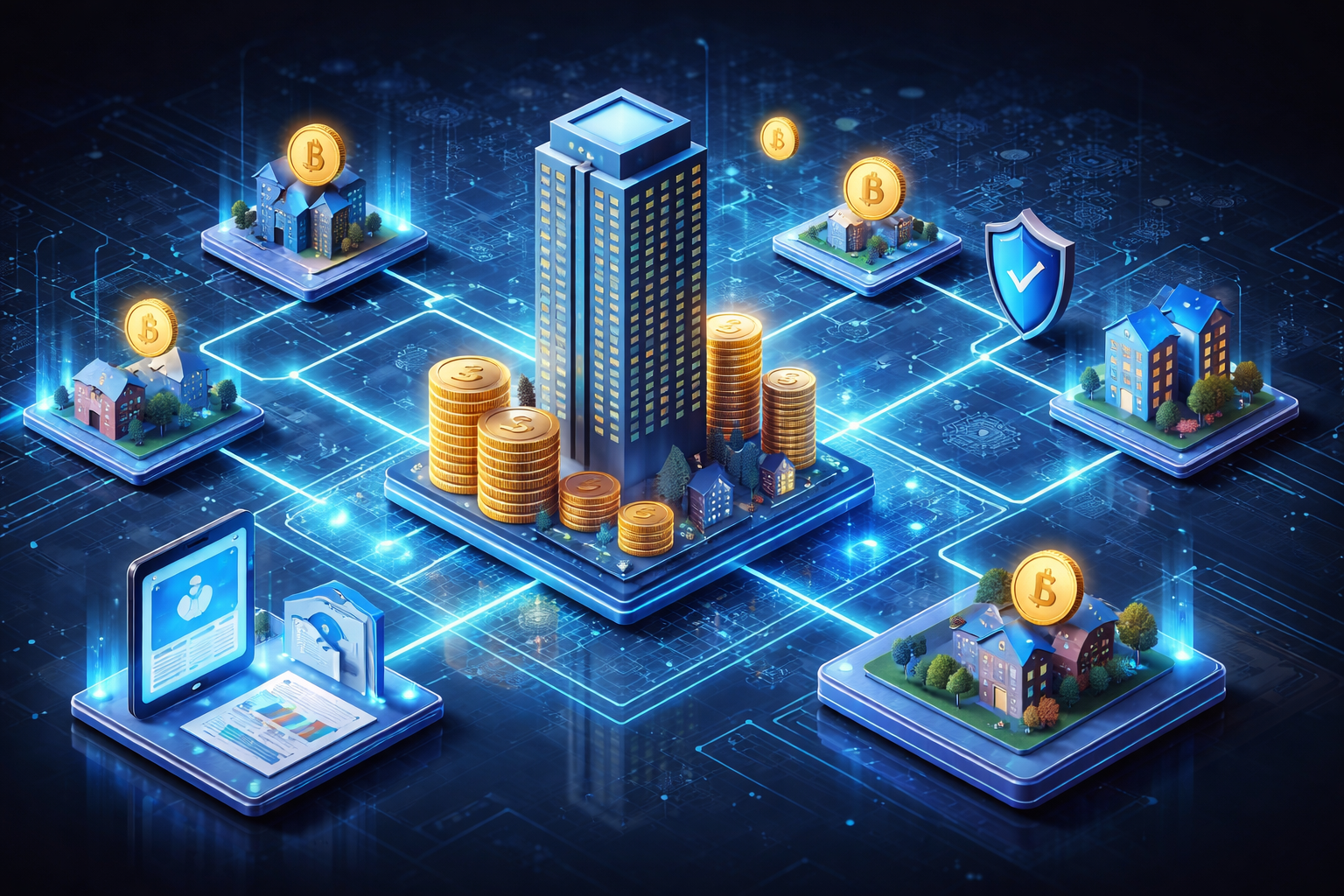
The global real estate sector has long been associated with stability, tangible value, and long-term wealth creation. Yet, despite its size, the industry has struggled with inefficiencies such as illiquidity, high entry barriers, opaque ownership records, and slow transaction processes. In recent years, Blockchain in real estate has emerged as a transformative force, offering a new way to digitize, manage, and exchange property value. At the center of this shift is real estate tokenization—a model that converts physical property into blockchain-based digital units that can be owned, traded, and governed more efficiently.
This article explores how blockchain enables tokenization, the core technologies behind it, and why businesses are increasingly turning to structured digital frameworks to modernize property ownership.
Understanding Real Estate Tokenization
Real estate tokenization is the process of converting the economic rights of a property into digital tokens recorded on a blockchain. These tokens represent a share of the property’s value, income, or governance rights. Unlike traditional real estate investment models, tokenization makes it possible to divide a single property into multiple digital units, each independently transferable.
Through real estate asset tokenization, property ownership becomes programmable, traceable, and more accessible. Investors no longer need to purchase or manage entire properties; instead, they can hold smaller, verifiable stakes represented by tokens.
Also Read: The Role of Blockchain Consulting Companies in Real-World Asset Tokenization
The Role of Blockchain as the Enabling Layer
Blockchain serves as the foundational infrastructure that makes tokenization viable at scale. Its decentralized architecture ensures that ownership records are tamper-resistant, transparent, and continuously auditable. Every transaction—whether issuance, transfer, or redemption—is recorded on a shared ledger that cannot be altered retroactively.
This structure supports blockchain-based property ownership, where trust is established through cryptographic verification rather than intermediaries. According to a 2023 World Economic Forum report, blockchain-based systems significantly reduce reconciliation errors and operational friction in asset-heavy industries, including real estate.
Smart Contracts: Automating Trust and Compliance
A critical component of tokenized real estate systems is the use of smart contract for real estate. These self-executing programs automatically enforce predefined rules such as rental income distribution, transfer restrictions, or compliance checks.
For example, when rental income is received, a smart contract can instantly distribute funds to token holders based on their proportional ownership. This automation reduces administrative overhead while improving accuracy and transparency.
Smart contracts also enable compliance logic to be embedded directly into the system, which is especially important in regulated property markets.
Fractional Ownership and Market Accessibility
One of the most powerful outcomes of tokenization is fractional property ownership. By breaking down high-value assets into smaller digital units, blockchain lowers investment thresholds and opens participation to a broader investor base.
This model increases liquidity and allows property developers to unlock capital more efficiently. A McKinsey analysis on digital assets noted that fractionalized ownership models can significantly expand investor participation while improving capital velocity in traditionally illiquid markets.
Ethereum and the Technology Stack Behind Tokenization
Public blockchains such as ethreum have played a significant role in shaping early real estate tokenization models due to their mature smart contract ecosystems. Token standards and decentralized infrastructure enable interoperability across platforms and applications.
On top of the blockchain layer, a dapp(decentralized application) provides user-facing functionality such as onboarding, asset browsing, transactions, and reporting. In more advanced implementations, governance mechanisms may be handled through a dao, allowing token holders to participate in decisions related to asset management or upgrades.
Together, these components form a complete real estate tokenization platform capable of supporting issuance, trading, compliance, and reporting.
Tokenized Assets and the Digital Property Economy
As properties move on-chain, they become tokenized real estate assets that can integrate with broader digital ecosystems. These assets are no longer static records; they are programmable instruments that interact with financial systems, analytics tools, and governance frameworks.
The rise of digital real estate assets reflects a broader shift toward real-world asset (RWA) tokenization, where tangible value is represented and managed digitally. A Boston Consulting Group report projected that tokenized RWAs could represent trillions of dollars in value globally by the early 2030s, with real estate as one of the leading categories.
Also Read: What is Digital Real Estate and Ways to Make Money
The Role of Specialized Service Providers
Implementing tokenization requires more than technology alone. Legal structuring, compliance alignment, platform architecture, and long-term governance must work together seamlessly. This is where a Blockchain consulting company becomes relevant, helping organizations navigate both technical and regulatory complexities.
Similarly, a Real Estate Tokenization development company brings domain expertise in designing secure systems that align with property laws, investor protections, and enterprise requirements. Companies like Vegavid have been involved in such initiatives, contributing architectural guidance and technical implementation experience across blockchain real estate solutions. Their role typically spans feasibility assessment, platform design, and integration planning rather than simple application development.
Across the ecosystem, real estate tokenization development services increasingly focus on scalability, compliance readiness, and enterprise-grade security—key factors for long-term adoption.
Also Read: Blockchain Consulting Company Insights: Navigating Regulation, Risk, and Innovation
Governance, Transparency, and Long-Term Value
Tokenization also introduces new governance models that improve transparency. With on-chain records, stakeholders gain real-time visibility into ownership, transactions, and performance metrics. This transparency strengthens trust among investors, developers, and regulators.
Decentralized governance structures, when applied thoughtfully, can align incentives and streamline decision-making while maintaining accountability. These capabilities position blockchain real estate solutions as more than a technological upgrade—they represent a structural evolution in how property markets operate.
Conclusion: A New Foundation for Property Markets
Blockchain is not merely digitizing real estate—it is redefining how property value is created, distributed, and governed. By enabling automation, transparency, and accessibility, tokenization addresses long-standing inefficiencies in the real estate sector while opening new opportunities for investors and developers alike.
As adoption grows, organizations exploring tokenization should focus on strategic alignment, regulatory clarity, and robust system design. Partnering with experienced teams and understanding the broader ecosystem is essential for success. Contact us at vegavid.com to collaborate.
FAQ’s
1 What is real estate tokenization?
Real estate tokenization converts property value or ownership rights into blockchain-based digital tokens that can be owned and transferred efficiently.
2 How does blockchain enable real estate tokenization?
Blockchain provides a secure, transparent, and immutable ledger to record property ownership and transactions without relying on intermediaries.
3 What role do smart contracts play in tokenized real estate?
Smart contracts automate processes like income distribution, transfers, and compliance, reducing manual effort and operational risk.
4 Why is fractional ownership important in commercial real estate tokenization?
Fractional ownership lowers investment barriers and improves liquidity by allowing multiple investors to own smaller portions of high-value properties.
5 Why do businesses work with real estate tokenization development companies?
They help design compliant, secure, and scalable tokenization platforms that align technology with legal and enterprise requirements.